
Loading...
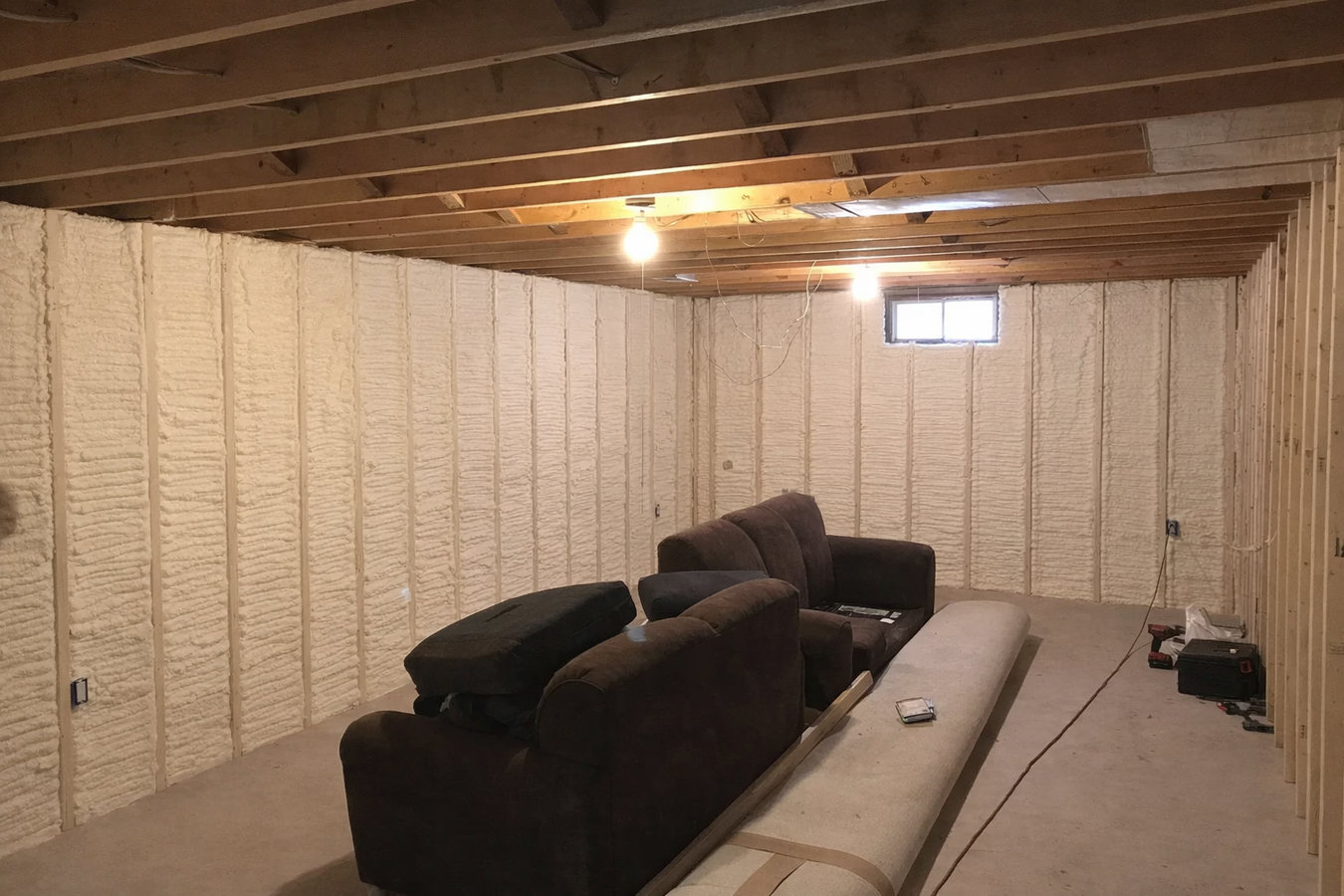
An uninsulated basement drains conditioned air and leaves your first floor cold in winter. We seal and insulate from the ground up so your home holds its temperature year-round.
Basement insulation in Wichita Falls creates a thermal barrier between your foundation and your living space, keeping conditioned air in and outside temperatures out - most jobs wrap up in one to three days. Without it, heat seeps up through your floors in summer and cold air rises from below all winter, making your HVAC system work harder than it should.
Many Wichita Falls homes built before the 1980s were never insulated below grade, and the ones that were often have materials that have degraded over decades. If your first floor feels cold in January no matter how high you set the thermostat, the basement is a likely culprit. Pair this work with our crawl space insulation service for homes where the lower level is not a true basement but still loses significant heat.
One step matters before any insulation goes in: checking for moisture. The clay-heavy soils under Wichita Falls expand and contract with the seasons, pushing moisture through small foundation cracks over time. We assess your walls and framing during the estimate visit and will not install material over a moisture problem.
If the first floor of your home feels noticeably cool during a North Texas cold snap, cold air is likely rising from an uninsulated basement. This is especially common in Wichita Falls homes built before the 1980s, where the wood framing at the top of the foundation wall was often left completely open to outside air. Heating bills climb while comfort stays low.
Wichita Falls summers are long and brutal, and winters can turn cold fast. If your electricity bill jumps in July and your gas bill spikes in January, your home is losing conditioned air somewhere. An uninsulated basement is one of the most common culprits, allowing both heat and cold to work through the floor between seasons.
A damp or musty smell in your basement signals moisture getting in through the foundation - a direct result of Wichita Falls clay soils expanding and contracting with rainfall and drought cycles. White chalky deposits on concrete walls are mineral residue left behind by water moving through. This must be resolved before insulation goes in, not after.
A large portion of Wichita Falls housing stock dates to the mid-20th century. If you have lived in your home for years and no one has mentioned the basement insulation, there is a reasonable chance it was never done. A quick visual check tells the story: bare concrete walls or exposed wood framing above the foundation means nothing is working for you down there.
We insulate basement walls, ceilings, and rim joists using the approach that fits your space and how you use it. The right method depends on whether your basement is finished or unfinished, whether you want to heat and cool it, and whether any moisture issues need to be addressed first.
Wall insulation makes sense when your basement is finished or will be conditioned - we use spray foam or rigid foam board, both of which handle North Texas humidity better than fiberglass batts against concrete. For unfinished basements used primarily for storage, insulating the ceiling keeps the main living floors comfortable without conditioning the whole space. Either way, we always seal the rim joist, which is the band of framing at the very top of your foundation wall. It is the biggest single source of heat loss in most older Wichita Falls homes, and it is often completely ignored.
For homes where the lower level is a crawl space rather than a full basement, our crawl space insulation service covers the same thermal and moisture goals. If the work uncovers other areas of the home needing attention, we can also discuss closed-cell foam insulation for attics, walls, and other high-priority spots in a single visit.
Finished or semi-finished basements where heating and cooling the space is the goal.
Unfinished storage basements where the priority is keeping the floor above warm without conditioning the whole lower level.
Any basement - this is the most overlooked heat-loss point in older Wichita Falls homes and should be part of every project.
Homes showing signs of foundation seepage or seasonal dampness before insulation materials are selected or installed.
Wichita Falls sits in a semi-arid climate with summer highs that regularly exceed 100 degrees and winters that can drop below freezing with little warning. That temperature range - more than 130 degrees between a July afternoon and a January cold front - puts constant stress on your home's thermal envelope. An uninsulated basement means you are fighting that entire swing with nothing but your HVAC system, and you pay for it every month.
The clay-heavy soils throughout Wichita County are a specific concern for basement walls. Clay expands when wet and contracts when dry, and that movement creates small cracks in foundation walls over time. After the February 2021 freeze, many homeowners discovered those cracks had let cold air pour through insulation that had shifted or degraded years before. A basement insulation project that starts with a moisture check catches these issues while they are still small. Homeowners across Wichita Falls and as far as Lawton, OK and Mineral Wells, TX deal with similar expansive-soil conditions and benefit from the same proactive approach.
Wichita Falls also has a real tornado history, and many residents use their basements as storm shelters. An insulated, air-sealed basement is more comfortable during extended shelter-in-place situations than a bare concrete room. It is also a better-prepared space for the severe weather that rolls through North Texas every spring, when pressure drops and humidity spikes can work their way into any unsealed gap.
Call or submit an estimate request and we will ask a few basic questions about your basement and any moisture concerns. We reply within one business day and can usually schedule an in-person visit within the week.
We walk your basement and examine the walls, the ceiling framing, and the rim joist. We check for any signs of water intrusion or existing insulation that should come out first. This visit takes 30 to 60 minutes and comes with no cost or obligation.
You receive a written estimate specifying exactly what work will be done, what materials will be used, and the total cost. No verbal quotes, no surprise line items. If you are comparing contractors, this is the document you need to make a fair comparison.
Before the crew arrives, clear the basement walls of boxes and shelving so the team has full access. Most projects finish in one to two days. We walk you through the completed work before leaving and can answer questions about moving back in.
Free written estimate, no obligation. We will check for moisture before recommending any materials.
(940) 298-1772We inspect foundation walls and the rim joist for water intrusion before recommending any materials. Wichita Falls clay soils are a known driver of basement moisture, and insulating over a wet wall creates mold. We catch it first.
A large share of our work is in Wichita Falls homes from the 1950s through 1970s - properties with framing quirks, no original insulation, and 60-plus years of clay-soil movement. We know what these basements look like and what they need.
The rim joist is the single biggest air-leakage point in most older Wichita Falls basements. Many contractors skip it or treat it as an upsell. We include it in every wall insulation job because leaving it open defeats much of the benefit of insulating the walls.
Our crew has spent years insulating basements and crawl spaces across Wichita Falls, so we know the local construction eras and moisture conditions before we arrive. Every job starts with a free written estimate and ends with documentation of the finished work, which gives you a clear record if a question ever comes up.
Every basement insulation project we complete starts with an honest assessment of the space. If moisture needs to be addressed first, we tell you - even when it delays the job. That approach keeps insulation from failing early and keeps homeowners from paying twice.
Dense, moisture-resistant foam insulation suited to rim joists, foundation walls, and other areas where water vapor is a concern.
Learn moreInsulation and air sealing for crawl spaces, addressing the same ground-level heat loss and moisture risks as an uninsulated basement.
Learn moreNorth Texas winters can turn fast. Call us today for a free written estimate and moisture check - no commitment required.