
Loading...
Wichita Falls Insulation Company provides commercial insulation, spray foam, attic insulation, and air sealing services throughout Wichita, KS. We have worked on Kansas homes and commercial buildings since 2022, with free written estimates, straight pricing, and a crew that knows the difference between a 1950s ranch house and a newer build on the west side.
Wichita is the largest city in Kansas and one of the most significant aerospace manufacturing hubs in the country, with a large and varied commercial building stock that includes older brick office buildings near downtown, industrial facilities on the south and west sides, and newer suburban commercial construction. Many of these buildings were built before Kansas adopted modern energy codes, and outdated insulation is a major driver of excessive utility costs across the city. Our commercial insulation service addresses the full range of commercial building needs in Wichita, from small office suites to larger industrial spaces, with written estimates and scope documentation before any work begins.
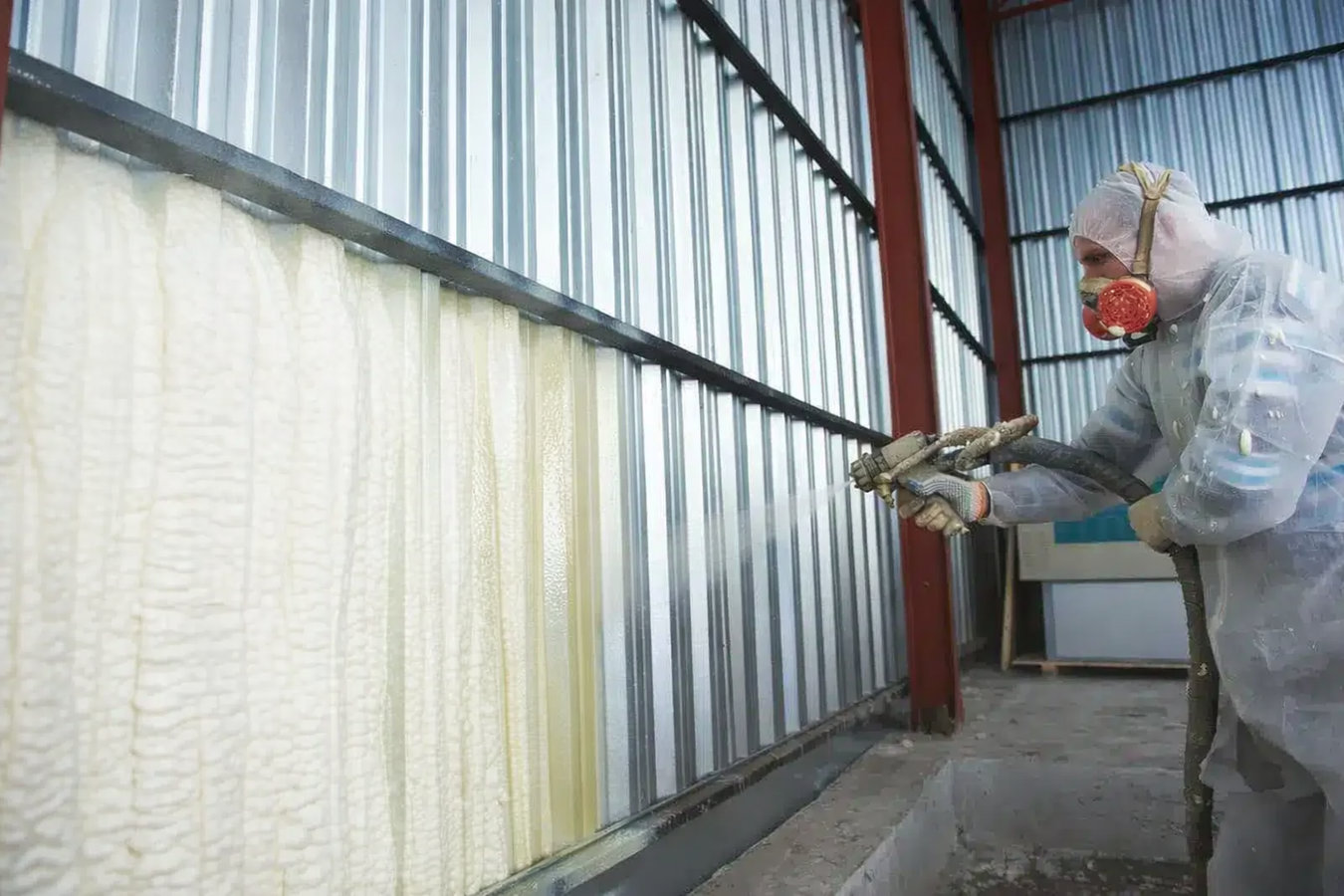
Wichita's freeze-thaw cycles stress concrete and foundations every winter, gradually opening cracks around slab edges, rim joists, and pipe penetrations that let cold air push into living spaces. Spray foam bonds directly to surfaces and fills those irregular gaps completely, which is something blown-in and batt insulation cannot do. For older Wichita homes with brick exteriors and postwar framing that has shifted over decades, spray foam is often the most thorough way to address both insulation and air sealing in a single visit.
Wichita summers reach 100 degrees and winters drop to 10 degrees or colder - and the attic is the primary thermal interface between your living space and the outdoor temperature in both seasons. Many Wichita homes from the 1950s and 1960s have original attic insulation that has compressed to half its original thickness or less. Bringing the attic to the proper depth for this climate zone addresses the biggest single source of heat loss in winter and heat gain in summer.
Wichita sits in the heart of Tornado Alley, and the sustained high winds that accompany spring severe weather push outside air through gaps around light fixtures, plumbing penetrations, and the attic floor. Insulation slows heat transfer but does not stop moving air. Sealing those gaps before new insulation goes in is the step that turns a good insulation job into one that actually delivers measurable energy savings.
Full basements are standard in Wichita, and insulating the rim joists - the band of framing at the top of the foundation wall - is one of the most cost-effective upgrades a Kansas homeowner can make. Cold air infiltration through uninsulated rim joists is a major source of heat loss in winter, and it often goes unaddressed for decades. Spray foam applied to rim joists seals and insulates in a single step and produces a noticeable improvement in basement comfort and energy bills.
Blown-in loose-fill insulation is the most common method for upgrading attic insulation in existing Wichita homes because it settles around existing framing and obstacles without requiring any wall openings. It is a cost-effective way to bring attic depth up to a modern standard in homes where the original insulation has thinned or settled. Blown-in work can typically be completed in a single morning with minimal disruption, and homeowners can remain in the home during installation.
Wichita has a genuinely dual climate: hot, humid summers with stretches above 100 degrees and cold winters where temperatures drop below 10 degrees and the frost line can reach 18 to 24 inches into the ground. Most other cities face one or the other with moderate versions of both. In Wichita, your insulation needs to perform at both extremes, and a contractor who approaches every market the same way will underspecify the job for at least one of those two seasons.
A large share of Wichita's housing stock was built between the 1940s and 1970s, a period when insulation requirements were minimal. Many of these homes, particularly in established neighborhoods like College Hill and Riverside, have original insulation that has been compressed and thinned by decades of seasonal temperature swings. Full basements are standard in Wichita, which adds rim joist insulation and basement wall moisture management to the list of considerations that simply do not exist in most Texas markets.
Wichita also sits in one of the most hail-prone regions in the country. Large hail events can compromise roof membranes and allow moisture to reach insulation inside attic spaces, where wet insulation loses most of its effectiveness. After any significant hail event, checking the insulation as well as the roof is a step most Wichita homeowners skip - but it is one that can prevent a slow and invisible energy performance problem from developing over the months following a storm.
We have been serving Wichita homeowners and businesses since 2022, and most of our work in the city involves older properties where the insulation has never been upgraded and the building envelope has accumulated air leakage points over decades of Kansas weather. The mix of housing types in Wichita - from 1920s bungalows near Old Town to postwar ranch homes on the east side to newer subdivisions in the Maize and Goddard corridors - means the right approach for each property is different, and we assess each home on its own terms rather than applying the same prescription to every job.
For commercial properties, Wichita's aerospace manufacturing base means a large proportion of the industrial and office building stock has been in service for 30 to 50 years, with insulation that may have never been assessed or upgraded. The city's location along the Arkansas River also creates localized moisture conditions in low-lying neighborhoods that affect how vapor management and insulation decisions are made, particularly for basement and crawl space work.
We serve homeowners throughout south-central Kansas and along the I-35 corridor, including nearby areas to the south like Gainesville, TX and communities throughout the Oklahoma and Texas panhandle region where the same climate extremes and housing characteristics create similar demand for qualified insulation contractors.
When you call or submit a request, we ask a few basic questions about your home and what problems you have been noticing. We reply to all inquiries within one business day and typically schedule in-home estimates within a few business days of first contact.
We walk through the areas most likely to be losing energy and note what is already there, any moisture issues, and obstacles that affect the project. You receive a written estimate covering all materials and labor before any work is scheduled - no surprises on the final invoice.
Most Wichita attic insulation jobs are completed in one day. Spray foam projects and larger commercial jobs may require two days. Spray foam requires that you and any pets leave the treated area for about 24 hours while the product cures. We protect finished surfaces and leave the workspace clean.
Before we leave, we walk you through the completed work so you can see even, consistent coverage across every treated area. You receive documentation of what was done. If you have any concerns in the weeks after installation, we will return to address them.
Free written estimates for all Wichita KS homeowners and business owners. No high-pressure sales and no obligation to commit until you have reviewed the numbers.
(940) 298-1772Wichita is the largest city in Kansas, with about 397,000 residents spread across a wide area along the Arkansas and Little Arkansas rivers. Known internationally as the Air Capital of the World for its century-long history of aircraft manufacturing, Wichita has a stable, skilled-worker economy driven by companies like Spirit AeroSystems and Textron Aviation. About 57% of homes are owner-occupied, and most long-term residents have a real stake in maintaining their properties.
The city has two distinct housing layers: older neighborhoods like College Hill, Riverside, and Delano near downtown, where homes date from the early 1900s through the 1960s, and newer subdivisions on the north, west, and northwest sides - Maize, Goddard, and the northwest corridor - where most construction has happened since the 1990s. Full basements are standard throughout the city, which creates insulation and moisture management needs that are different from the slab-dominant housing markets farther south. The Keeper of the Plains at the confluence of the two rivers is one of the most recognized landmarks in the state and sits at the heart of a city whose older neighborhoods contain some of the most energy-hungry housing stock in the region.
We serve homeowners and businesses throughout Wichita and the broader south-central Kansas region. Customers coming to us from areas farther south along the I-35 corridor often mention similar concerns around Gainesville, TX and nearby communities where the same insulation needs are driven by similar climate extremes.
High-performance spray foam that air-seals and insulates in a single application.
Learn moreProper attic insulation that keeps conditioned air in and outdoor temperatures out.
Learn moreLoose-fill insulation blown into attics and wall cavities for even, gap-free coverage.
Learn moreWhole-home insulation solutions that improve comfort and reduce energy bills.
Learn moreSafe removal of old, damaged, or contaminated insulation before a fresh install.
Learn moreCrawl space insulation that stops moisture, pests, and cold floors from entering your home.
Learn moreInterior and exterior wall insulation for better soundproofing and thermal control.
Learn moreIdentifying and sealing air leaks that silently drive up heating and cooling costs.
Learn moreBasement insulation and moisture control that makes below-grade spaces livable.
Learn moreDense, rigid closed-cell foam delivering the highest R-value per inch available.
Learn moreFlexible open-cell foam ideal for interior walls, floors, and sound dampening.
Learn moreSealing attic bypasses and penetrations before adding insulation for maximum efficiency.
Learn moreHeavy-duty vapor barriers that prevent ground moisture from entering your crawl space.
Learn moreProfessional vapor barrier installation for crawl spaces, basements, and below-grade areas.
Learn moreAdding insulation to existing homes without major demolition or disruption.
Learn moreCommercial and light industrial insulation for offices, warehouses, and retail spaces.
Learn moreKansas winters are hard on poorly insulated homes. Call for a free written estimate before the next cold snap arrives.