
Loading...
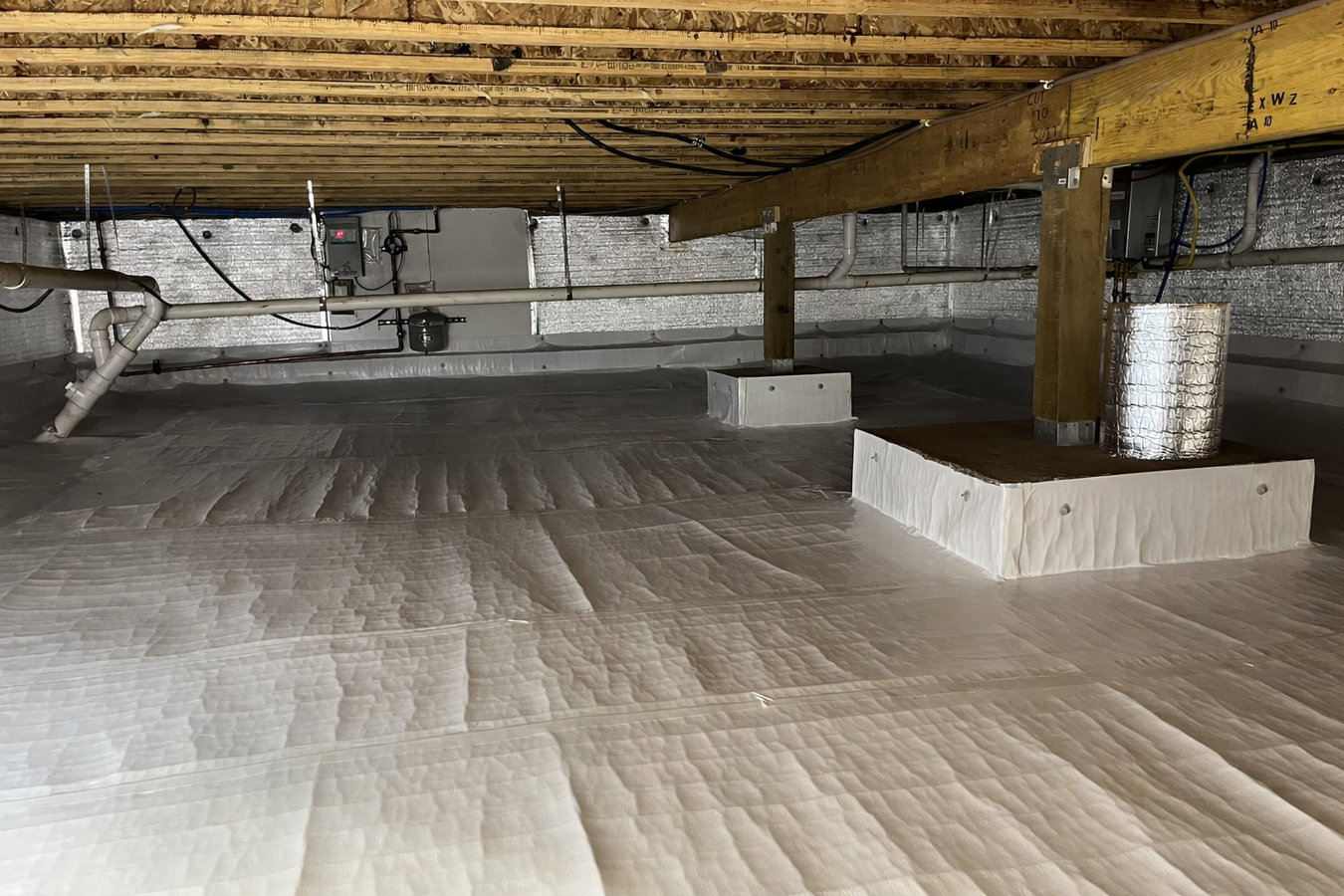
Wichita Falls clay soil pushes moisture into your crawl space year-round. A properly sealed barrier stops that moisture before it rots your floor joists and grows mold in your subfloor.
A crawl space vapor barrier in Wichita Falls is a thick sheet of plastic laid across the bare dirt under your home to block ground moisture from rising into your floor structure - most residential installations take one to two days and cover the full crawl space floor with seams taped and edges secured to the foundation walls.
Without a barrier, the soil beneath your home releases moisture continuously, especially after Wichita Falls storms dump rainfall on already-saturated clay. That vapor soaks into floor joists, insulation, and subfloor wood over months and years, quietly causing rot, mold, and structural damage you cannot see from inside the house. If you have noticed soft spots in your floors or a persistent musty smell, the crawl space is the first place to look. Pairing a vapor barrier with crawl space insulation addresses both moisture and thermal performance at the same time.
The EPA's guide on moisture and mold notes that controlling ground moisture is one of the most direct ways to prevent mold growth in below-grade spaces. In Wichita Falls, where heavy clay soils hold water long after the surface has dried out, that guidance applies directly to the crawl space problem homeowners here face every year.
A persistent earthy or musty odor inside your home, especially near floor vents or in rooms over the crawl space, is one of the clearest signs that moisture is rising from below. In Wichita Falls, this smell often intensifies in late spring and early summer when storm season keeps the clay soil wet. If the odor comes and goes with the weather, the crawl space is almost certainly the source.
If you notice areas of your floor that give slightly when you walk on them, or feel noticeably different from the rest of the floor, moisture damage to the wood underneath may already be underway. In Wichita Falls, where clay soils stay wet for extended periods after rain, this kind of slow moisture exposure can weaken floor joists over months or years without any obvious water event. It is worth having someone look under the house before the damage spreads.
If you have ever looked into your crawl space and seen water droplets forming on pipes or metal ductwork, the air down there is carrying more moisture than it should. That condensation drips onto wood and insulation and starts the rot process from the surface in. This is especially common in Wichita Falls during the humid stretch from June through September when ground temperatures and summer heat combine.
Mice, rats, and insects are drawn to the damp, dark environment of an unprotected crawl space. If you have noticed droppings near the access hatch, heard movement under the floor, or found chewed insulation, the crawl space likely has the moisture conditions that attract pests. Sealing the floor with a proper barrier makes the space less hospitable and removes one of the main reasons they move in.
We start every job with an on-site inspection of the crawl space, checking the condition of any existing material, looking for signs of moisture damage or mold, and measuring the space before we quote anything. You get a written estimate that breaks down materials and labor, not a number pulled from thin air.
The installation uses heavy polyethylene sheeting, typically 10 to 20 mils thick, laid across the full floor area with seams overlapping by at least a foot and sealed flat with tape. Edges are fastened up the foundation walls so the barrier stays in place over time. For homes where ground-only coverage is not enough, we also offer full vapor barrier installation that extends to the foundation walls and seals vents for complete encapsulation. Homeowners who want thermal protection alongside moisture control can pair either service with crawl space insulation to address both in a single project.
Before the crew leaves, we walk you through the finished work, either in person at the access point or through photos taken during installation. You should never have to take on faith that the job was done correctly.
Homes where the primary concern is sealing the crawl space floor to block moisture from rising soil, suited for most Wichita Falls pier-and-beam and shallow-foundation homes.
Homes with a history of moisture problems, standing water, or mold, where sealing both the floor and foundation walls provides stronger protection.
Older Wichita Falls homes where the original barrier has torn, shifted, or degraded over decades and needs to be removed and replaced with thicker material.
Homeowners who want to know exactly what is under their house before committing to any work, with a written report on condition and recommendations.
Wichita Falls sits on some of the most reactive clay soil in Texas, the kind that swells when it gets wet and shrinks when it dries out. After a storm, that clay under your home stays wet long after the surface dries out, continuously releasing moisture upward. Summer temperatures that regularly exceed 100 degrees accelerate that process, pushing vapor into your floor structure for months at a stretch. For homeowners in Wichita Falls neighborhoods like Floral Heights or Midtown where older pier-and-beam homes are common, this is not a theoretical problem.
A significant portion of the city's housing stock was built in the mid-20th century, when crawl space moisture control was rarely a priority. Many of these homes have little or no barrier under the house, and whatever was installed decades ago may be torn, thin, or completely degraded. The February 2021 freeze and the subsequent heavy rainfall events that followed left many crawl spaces in worse condition than homeowners realized. Homeowners in Gainesville and Lawton face similar conditions given the same clay soil belt that runs through this region.
North Texas also experiences its rain in bursts rather than steady drizzle. Heavy, fast storms dump water on already-saturated ground, and crawl spaces can take on a surprising amount of moisture in a short window. A properly installed barrier with secured edges limits how much event-driven moisture ends up in your floor structure rather than draining away from it.
We ask a few basic questions about your home's age, crawl space access, and any moisture issues you have noticed. Most Wichita Falls homeowners hear back within one business day to schedule the on-site visit. There is no commitment at this stage.
We go under the house in person, check the condition of any existing material, look for moisture damage or mold, and measure the full floor area. This visit takes 30 to 60 minutes and you receive a written estimate before we leave or shortly after.
The crew clears debris and any old torn plastic, then lays heavy sheeting in overlapping sections across the entire floor. Seams are taped flat, edges are fastened to the foundation walls. For most Wichita Falls homes this takes one full workday.
Before the crew leaves, we show you the completed work, either at the access point in person or with photos taken during installation. We explain what to watch for and how often to have the barrier checked. You leave knowing exactly what was done.
We inspect your crawl space in person, give you a written quote, and explain exactly what needs to be done. No surprises on the bill.
(940) 298-1772We specify the mil rating of every barrier we install in the written estimate before work begins. Thicker material, typically 10 to 20 mils, holds up to the rocky clay soil common in Wichita Falls and resists punctures during future inspections. You know what you are getting before the crew shows up.
We have worked on crawl spaces throughout Wichita Falls and the surrounding area long enough to know how North Texas clay behaves after a storm season. That local experience shapes how we secure edges, overlap seams, and recommend encapsulation versus ground-only coverage for homes where the soil holds more water than average.
Before the job is closed out, we provide photos taken inside the crawl space showing the completed barrier coverage, taped seams, and wall edges. You do not have to crawl under your house to verify the work. Every inch of exposed ground should be covered, and we show you that it is.
The quality gap between crawl space contractors is wider than homeowners expect, so experience matters here. We know when the City of Wichita Falls Development Services requires a permit for encapsulation projects and pull permits before work begins, protecting your home's record for future sales and refinancing. See permit requirements at the City of Wichita Falls Development Services office.
Vapor barrier work is invisible once it is done, which makes the contractor's reputation and transparency the only real quality check you have. We give you a written scope, photos of the finished work, and a clear answer on permit requirements every time, because that is how we would want it handled if it were our home.
The U.S. Department of Energy's moisture control guidance identifies crawl space ground cover as a fundamental protection for homes in mixed and humid climates, and Building Science Corporation sets the installation standards we follow for seam overlap and wall termination.
Full vapor barrier services that extend beyond the crawl space floor, including basement walls, foundation perimeters, and whole-home moisture protection.
Learn moreAdd insulation above or alongside the vapor barrier to address heat loss through the floor system during Wichita Falls winters.
Learn moreStorm season in Wichita Falls comes fast. Get your crawl space sealed and protected before the next round of heavy rain.