Loading...
Wichita Falls homes built before 1980 are losing conditioned air every day through under-insulated attics and walls. A retrofit adds new material without tearing anything apart, and you notice the difference the first hot week after the work is done.
Retrofit insulation in Wichita Falls means adding new insulation to a home that is already built, targeting the attic, wall cavities, and crawl space through small access points rather than a full renovation, and most residential attic jobs are completed in a single day without disrupting your living areas.
A large share of Wichita Falls homes were built in the 1950s through 1970s, when insulation requirements were far less strict than they are today. If your home is in that range and has never had insulation work done, whatever was originally installed has likely settled and thinned over the decades. Wichita Falls summers regularly push past 100 degrees Fahrenheit, and a poorly insulated attic forces your air conditioner to run almost continuously just to keep up. A well-executed retrofit addresses the biggest energy loss points without requiring you to vacate the house or live through a major renovation. Pair the attic work with whole-home insulation when you want to address walls, floors, and the building envelope in a single coordinated project.
The U.S. Department of Energy recommends that homes in North Texas have attic insulation deep enough to fully cover the floor joists, a standard many Wichita Falls homes built before 1980 do not meet. A quick look with a flashlight is all it takes to know whether you are in that group.
If your electric bill climbs sharply from June through September and your HVAC runs nearly all day, your home is likely losing cool air faster than your system can replace it. In Wichita Falls, where summer heat is intense for five to six months, a poorly insulated attic is the most common reason a well-maintained HVAC system still struggles. This is one of the clearest signals that a retrofit would make a measurable difference on your next utility statement.
If one bedroom is stuffy in summer or a corner of the house is cold in January, that space likely has a gap in its insulation or air barrier. Homes built in the 1960s and 1970s in Wichita Falls often have uneven insulation coverage that creates these hot and cold pockets. Walking through your home and noticing temperature differences from room to room is a simple and reliable way to spot where the problem is.
Take a flashlight into your attic and look at the floor. If you can clearly see the wooden joists running across it, your insulation has either settled over time or was never thick enough to begin with. The Department of Energy recommends attic insulation in North Texas be deep enough to fully cover those joists. If you can see them, you are losing energy every day and the fix is straightforward.
In Wichita Falls, where wind-driven dust is a seasonal reality, homes with poor air-sealing accumulate dust more quickly than well-sealed ones. If you notice dust settling fast on surfaces, or feel a faint draft when you hold your hand near an electrical outlet on an exterior wall, outside air is getting in through the same gaps that are costing you money on your energy bill. Sealing those pathways is part of a quality retrofit job.
We start every retrofit project by checking your existing insulation levels and identifying air leaks around pipes, wires, recessed lights, and any penetrations through the ceiling or floor. Sealing those gaps before adding new material is the step many contractors skip, and it is the reason some homeowners still have high bills and drafts even after a job is done. You get a written quote before any work is scheduled, and the quote breaks down exactly what is included.
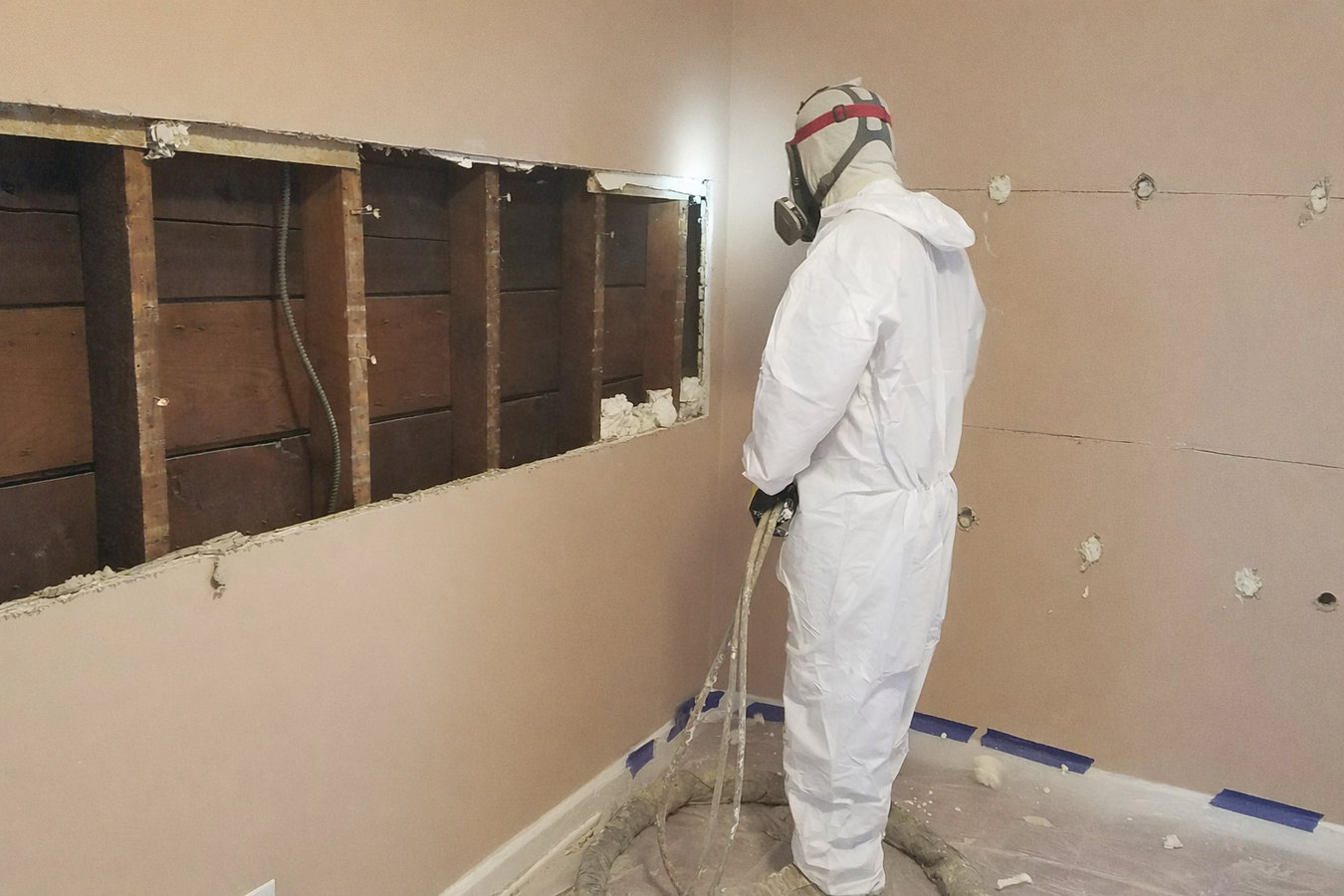
For attics, we use blown-in fiberglass or cellulose, which fills irregular spaces thoroughly and can be installed without disturbing your living areas at all. For wall cavities in existing construction, we use dense-pack blown-in material installed through small holes drilled from the interior or exterior, then patched cleanly. Homes with significant air-sealing needs or hard-to-reach gaps benefit most from commercial-grade spray foam in targeted areas alongside the blown-in material. When a home also has older or missing home insulation in multiple areas, we can scope a full-building project that addresses the attic, walls, and crawl space in the right order.
Once the work is complete, we walk you through the finished attic or work area and give you a written record of what was installed, where, and how much material was added. That documentation supports any tax credit paperwork and gives you a clear record if you ever sell the home.
The most common starting point for Wichita Falls homes, adding new blown material over existing coverage to reach recommended depth without entering your living space.
Homes where exterior walls have little or no insulation, filled through small drilled holes without requiring a full drywall tearout.
Ranch-style and pier-and-beam homes where heat escapes through the floor system, addressed by adding insulation between the floor joists from below.
Older Wichita Falls homes that need attic, wall, and crawl space addressed together for the biggest impact on comfort and energy costs.
Wichita Falls sits in a climate zone where the insulation in your home has to work hard in two directions. Summer temperatures regularly push past 100 degrees Fahrenheit, and attic temperatures on the hottest days can reach 150 degrees or more. Winters bring hard freezes, ice storms, and north winds that cut through any gap in your building envelope. A home that is uncomfortable in July is often the same home with cold floors and drafty rooms in January, and the cause is usually the same thin, settled insulation from the original 1960s or 1970s construction.
The strong, sustained winds common in this part of North Texas also make air-sealing more important here than in calmer climates. Wind-driven air infiltration pushes outdoor air through gaps around outlets, pipes, and light fixtures, raising both your energy bills and the amount of dust that settles inside your home. The February 2021 winter storm was a sharp reminder of how many Wichita Falls homes had insulation that was not ready for sustained below-freezing temperatures, and the interest in retrofits has stayed elevated since.
We serve homeowners throughout the Wichita Falls area, including Wichita Falls, as well as surrounding communities like Gainesville and Weatherford, where the same pre-1980 housing stock and climate conditions make retrofit work equally valuable.
We will ask a few basic questions about your home, its age, and what problem you are trying to solve. You can expect a reply within one business day, and we will schedule an in-home assessment at a time that works for you.
We visit your attic, walls, and crawl space to check current insulation levels and identify air leaks. The visit typically takes 30 to 60 minutes, and you receive a written quote before any work is scheduled. There is no obligation and no high-pressure close.
For a standard attic job, the crew completes the work in three to six hours. They seal air leaks first, then blow in new material to the correct depth. You stay in your home, and the noise level is similar to a vacuum cleaner running in another room.
Before leaving, we show you the finished work and hand you a written summary of what was installed and where. That document supports your federal tax credit filing and gives you a clear record for your home files or future sale.
Free in-home assessment, written quote, no obligation. We reply within one business day.
(940) 298-1772We seal air leaks around pipes, wires, and penetrations before adding any new material. Skipping this step is the most common shortcut in the industry, and it is the reason some homeowners still have high bills and drafts after a retrofit. We include it in every attic job because it is the part that makes the insulation actually perform.
We work across Wichita Falls and 11 surrounding communities, from Lawton to Denton, so we know the housing stock, the climate conditions, and the building patterns in each area. That local knowledge shapes how we assess your home and what we recommend for it.
The federal Inflation Reduction Act tax credit for insulation improvements requires documentation. We provide a written summary at job completion that itemizes materials and quantities, giving you exactly what you need when you file. You should not have to chase paperwork from your contractor.
Years of hands-on work on Wichita Falls homes is one of the clearest quality signals available to homeowners here. Our crews know the local construction eras, brick profiles, and soil conditions before they pull into your driveway. Ask any contractor you consider how long they have worked in this area and what past projects they can show you.
Retrofit insulation is one of the highest-return improvements available for a pre-1980 Wichita Falls home, and the federal tax credit makes the timing better than it has been in years. We do the assessment, give you a written quote, and complete the work correctly the first time. Call us or submit a request online and we will be in touch within one business day.
Retrofit and new-installation insulation for Wichita Falls offices, warehouses, and retail buildings to cut commercial energy costs.
Learn moreWhole-home insulation assessments and installation covering attic, walls, and crawl space in a single coordinated project.
Learn moreAttic temperatures climb past 150 degrees on the hottest days here. Book a free assessment now so the work is done before your next utility bill spikes.