
Loading...
Ground moisture from North Texas clay soil quietly rots floor joists and grows mold in crawl spaces over years. We seal it out completely with heavy-duty polyethylene and show you the finished work before we leave.
Vapor barrier installation in Wichita Falls covers the ground beneath your home with heavy plastic sheeting to block moisture from rising into your floor structure - most residential crawl space jobs take one full day, with seams overlapped and taped and edges fastened to the foundation walls so nothing pulls back over time.
The problem this solves is invisible but consistent. Wichita Falls clay soil absorbs water during storm season and releases it slowly for weeks afterward, pushing vapor up through any exposed ground directly into your crawl space. That moisture works its way into floor joists, insulation, and subfloor wood without any obvious water event. If you have lived with a musty smell or soft floor spots, the ground under your home is the most likely cause. Pairing barrier work with crawl space vapor barrier coverage ensures the full floor area is addressed in a single installation.
The U.S. Department of Energy's moisture control guidance identifies ground vapor barriers as a foundational protection for homes in mixed climates, and the North American Insulation Manufacturers Association (NAIMA) recommends moisture control as a prerequisite to any insulation work done in crawl spaces.
A damp, earthy odor near floor vents or in rooms closest to the ground often comes from moisture in the crawl space below. In Wichita Falls, this tends to get worse in late summer when the heat drives ground moisture upward through exposed soil. It is one of the clearest signs that the ground under your home is not properly sealed.
Walk slowly across your floors and pay attention to any spots that feel slightly soft or flex when you step on them. This can mean the wood framing beneath your floor has absorbed enough moisture to begin weakening. In older Wichita Falls homes built before 1980, this is a common finding when crawl spaces have never been treated.
Water droplets forming on pipes or metal ductwork under your home are a sign of high moisture levels in the crawl space. The same moisture forming on cold surfaces is also soaking into your wood and insulation. This is especially common in Wichita Falls during the humid stretch from June through September when ground and air temperatures combine.
When your crawl space is damp, your air conditioner works harder because it is fighting moisture as well as heat. If your cooling bills seem high for the size of your home, an unsealed crawl space could be contributing. This is a less obvious sign, but one that many Wichita Falls homeowners only connect after having a vapor barrier installed and watching their bills ease up.
Every job starts with an on-site assessment. We go under the house, check the condition of any existing material, look for signs of moisture damage or active mold, and measure the space before we quote anything. You receive a written estimate that specifies the material thickness and covers all prep work so you are not surprised by additions on the day of installation.
Our standard installation uses heavy polyethylene sheeting, typically 10 to 20 mils thick, with seams overlapping by at least a foot and taped flat. Edges are fastened to the foundation walls so the barrier holds its position through Wichita Falls freeze-thaw cycles and clay soil movement. For homeowners who want to go further, we offer full encapsulation that extends coverage to the foundation walls and seals vents, and we regularly pair vapor barrier work with retrofit insulation when homeowners are addressing the floor system as a whole. For homes where only the ground floor needs attention, crawl space vapor barrier installation is the focused service for that scope.
Once the installation is complete, we walk you through the finished work with photos or at the access point in person. You should be able to see every seam, every fastened edge, and every inch of coverage before we close out the job.
Homes where the primary concern is sealing exposed crawl space dirt to stop moisture from rising into the floor structure below living spaces.
Homes with active moisture problems, mold history, or standing water, where sealing the floor, walls, and vents provides a complete moisture barrier.
Older Wichita Falls homes where existing material has torn, degraded, or been disturbed over decades and needs full removal and replacement.
Homeowners who want a baseline inspection with written findings before deciding on the appropriate scope of work for their specific crawl space.
Wichita Falls sits on expansive Vertisol clay soils that are among the most moisture-reactive in Texas. These soils swell when wet and contract when dry, a cycle that happens multiple times per year given North Texas's pattern of drought followed by heavy rainfall. That movement opens cracks and gaps in foundations and crawl space walls, creating new pathways for ground moisture to enter floor systems long after any obvious rain event has passed.
Summer temperatures that regularly exceed 100 degrees accelerate the vapor migration problem. When hot air meets the cooler crawl space environment, moisture condenses on surfaces throughout the floor system. A significant share of Wichita Falls homes were built between the 1940s and 1970s, when vapor barriers were not standard practice, leaving these older homes in Wichita Falls neighborhoods like Floral Heights and the Sheppard corridor without any protection under the floor.
Homeowners in Denton and Mineral Wells face similar conditions since both cities sit on the same North Texas clay belt. The February 2021 winter storm also left many crawl spaces in worse condition than homeowners realized, as temperature swings caused existing barrier material to crack and shift. If your home has not had an inspection since then, it is a reasonable time to look.
We ask a few basic questions about your home's age, whether you have a crawl space or slab foundation, and whether you have noticed any specific problems like odors or soft floors. Most Wichita Falls homeowners can schedule a free estimate within a few days. This first call takes about five minutes and requires no commitment.
We come to your home and go under the house with a flashlight and a moisture meter to measure how much water is in the air and wood down there. We check the size of the space, the condition of the ground, and whether any existing material needs to be removed. You receive a written estimate before we leave or shortly after.
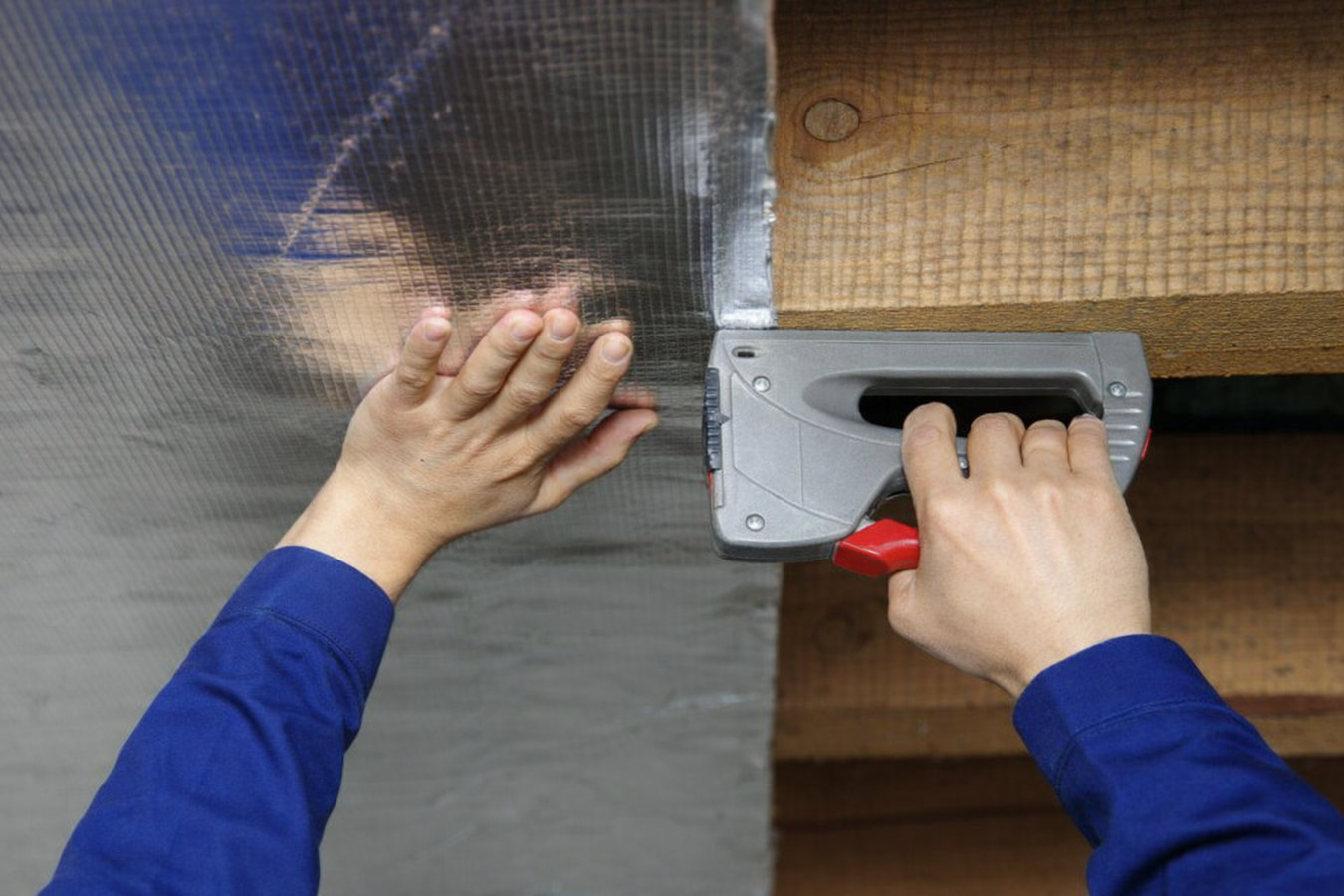
The crew clears debris and any old degraded plastic, then lays heavy sheeting in overlapping sections across the entire floor. Seams are taped flat and edges are fastened to the foundation walls. For most Wichita Falls homes this work takes one full day. You do not need to leave your home.
Before the crew leaves, we show you the completed work - either at the access point in person or with photos taken during installation. We explain what to watch for over time and how often to have the barrier checked, typically once a year and after any hard storm season.
We inspect your crawl space in person, give you a written quote with material specifications, and show you the finished work before we leave.
(940) 298-1772We put the mil rating of the plastic in every written estimate before work begins. For Wichita Falls crawl spaces, where rocky clay soil can puncture thin material, we typically recommend and install 10-to-20-mil sheeting. You know exactly what you are getting, not just a vague reference to heavy-duty plastic.
We have worked on crawl spaces across Wichita Falls long enough to know how the Vertisol clay here behaves through drought-to-rain cycles and how that affects edge fastening and seam overlap. That local experience shapes decisions about encapsulation versus ground-only coverage that a contractor new to this region would not make correctly.
Vapor barrier work is invisible once it is done, which makes transparency the only real quality control. We provide photos taken inside the crawl space showing coverage, seam taping, and wall termination before the job is closed. You have documented proof that every inch was covered, which also protects you if you ever need to show a home inspector or buyer.
We know when the City of Wichita Falls requires permits for encapsulation work that goes beyond ground cover and we pull permits before work starts. Permit coordination is one of the few consumer protections in place for this kind of work. We handle it so you do not have to navigate it yourself.
Vapor barrier work in Wichita Falls is not complicated, but it is easy to do poorly. Thin material, loose edges, and untaped seams look fine on the day of installation and fail within a year. We do not cut corners on material thickness or edge fastening because the whole point of this job is protection that lasts, not protection that looked fine at a glance.
Add insulation to walls, floors, and attics in existing Wichita Falls homes without tearing out finished surfaces, addressing what the original construction left out.
Learn moreGround-focused barrier installation specifically for crawl spaces, using heavy polyethylene sheeting to block moisture before it reaches your floor framing.
Learn moreSummer heat season in Wichita Falls is coming. A vapor barrier installed now stops moisture damage before it starts, and estimates are free.